

2026 Milan Design Week -
Design Fair as a Cross-Category Brand Platform
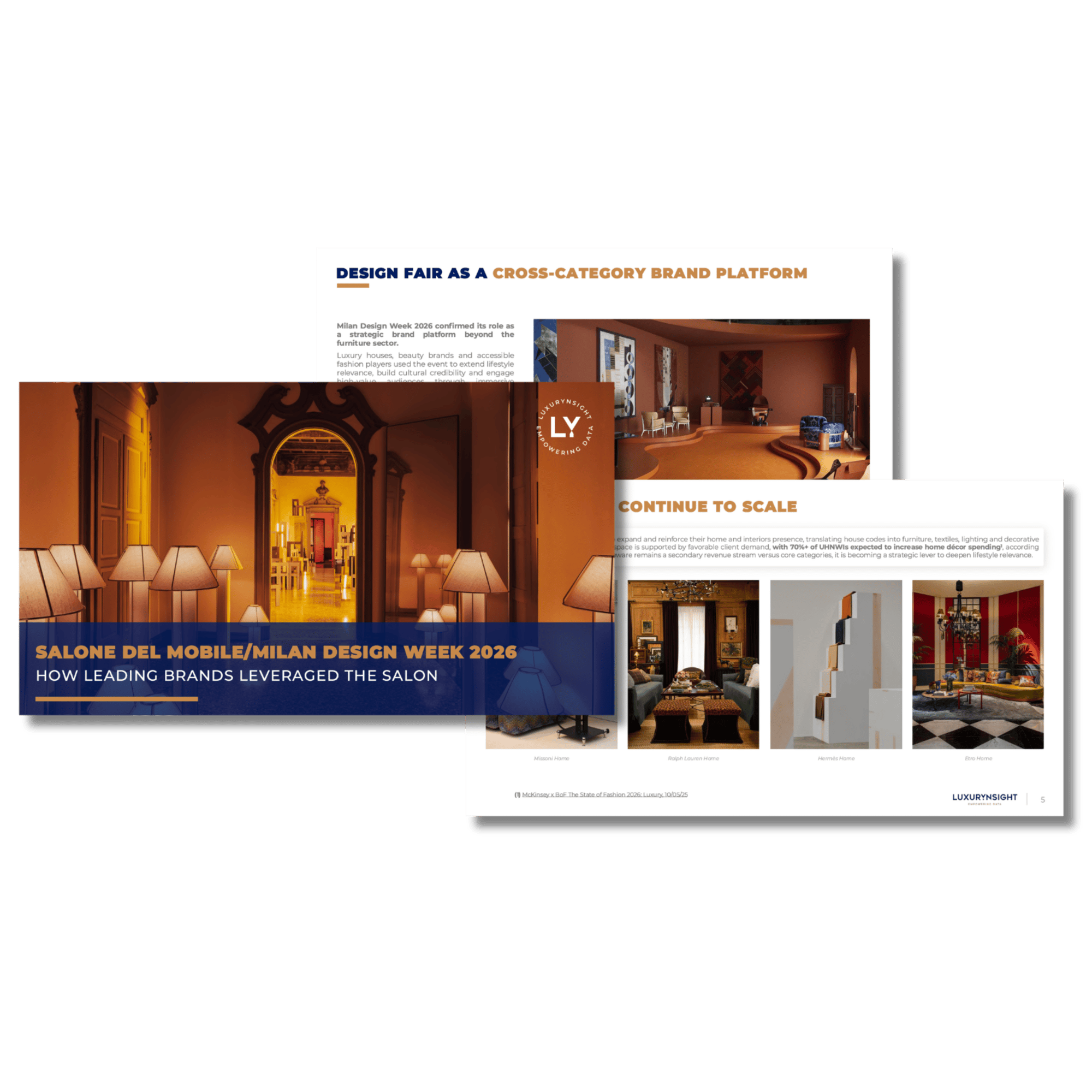
Milan Design Week is no longer a furniture fair. It is luxury's most versatile brand stage.
In 2026, the brands that resonated weren't those with the biggest pavilions or the most-photographed installations. They were the ones who understood that Milan Design Week 2026 had quietly become something else entirely: a citywide platform for cultural credibility, lifestyle storytelling, and high-value audience engagement, far beyond the interiors industry that built it.
What You’ll Gain from This Report
- A cross-category brand framework
How luxury houses, beauty players, and accessible fashion brands each used the same event to serve completely different strategic goals and what separates those who built equity from those who simply showed up. - Deep-dive brand activations
Case studies on how Louis Vuitton, Prada, Bottega Veneta, Balenciaga, Fendi, Hermès, Armani, Dior, Miu Miu and others constructed their Salon presence: from Objets Nomades to heritage archives to artist partnerships. - The 2026 shifts you need to know
Beauty brands entered the design fair in force for the first time. Accessible fashion followed luxury's playbook with immersive installations. Archive storytelling moved from backstory to centrepiece. This report maps all three new directions. - Artist collaboration as brand strategy
Why leading houses brought in Theaster Gates, Eduardo Chillida, Kwangho Lee, Kelly Wearstler and others and how external creative authority translates into craft legitimacy and collectible value at a design-led event. - Inspiration for your own experiential strategy
From immersive domestic interiors to public installations to shoppable sensorial experiences, the activations in this report show how to turn a city into a brand territory and how that territory becomes a clienteling moment.
Luxurynsight, 227 rue Saint-Denis, 75002, Paris, France